HERITAGE MEETS YOUR BRAND
History of
Stanley 1913
From an all-steel bottle to an everyday icon. The story behind a brand people recognize—and products they can make part of their routine.
Explore their story ↓01 / AN IDEA WITH STAYING POWER
A better bottle began with a better question.
1913Stanley’s story began with a practical challenge: how could a portable bottle keep a drink hot while coping with the demands of a working day? In 1913, inventor William Stanley Jr. developed an all-steel, double-wall vacuum bottle. It brought strength and temperature retention together in an object people could carry with them.
The National Inventors Hall of Fame describes how the bottle improved durability compared with the glass-lined vacuum containers of its era. Stanley applied an inventor’s mindset to an ordinary routine: a coffee break should not depend on treating the container as something fragile. Read the inventor’s history ↗
That is an important distinction in the brand’s origins. Their starting point was a useful solution, rather than a trend or a seasonal color. The bottle had a job to do. Keeping that job at the center of the design helped give the Stanley name a clear meaning: practical drinkware for people who expected to take it somewhere.
It also explains why the brand’s early story still matters to a modern buyer. A reusable product earns its place through the small things it makes easier: carrying a drink, taking a break, and reaching for a familiar object again. A long history can create interest, but everyday usefulness is what gives a gift an opportunity to stay in someone’s routine.
Today’s range should not be confused with the original invention. Different Stanley products have different lids, capacities, materials, and performance specifications. The common thread is the problem-solving tradition; the details still need to be checked for the exact item. A historic reputation is a reason to look more closely, not a substitute for choosing the right product.
For someone selecting branded merchandise, that creates a good starting point. Begin with the recipient’s day. A bottle for time outdoors, a mug for a desk, and a large handled tumbler serve different purposes. The strongest project connects the brand’s familiar name with a format the recipient will actually want to use.
Explore Stanley products on this site →THE BOTTLE THAT TELLS THE STORY
Recognizable roots.
Room for your logo.
A break outdoors with the Stanley 48 oz Legendary Classic Bottle.
See this Classic Bottle on EA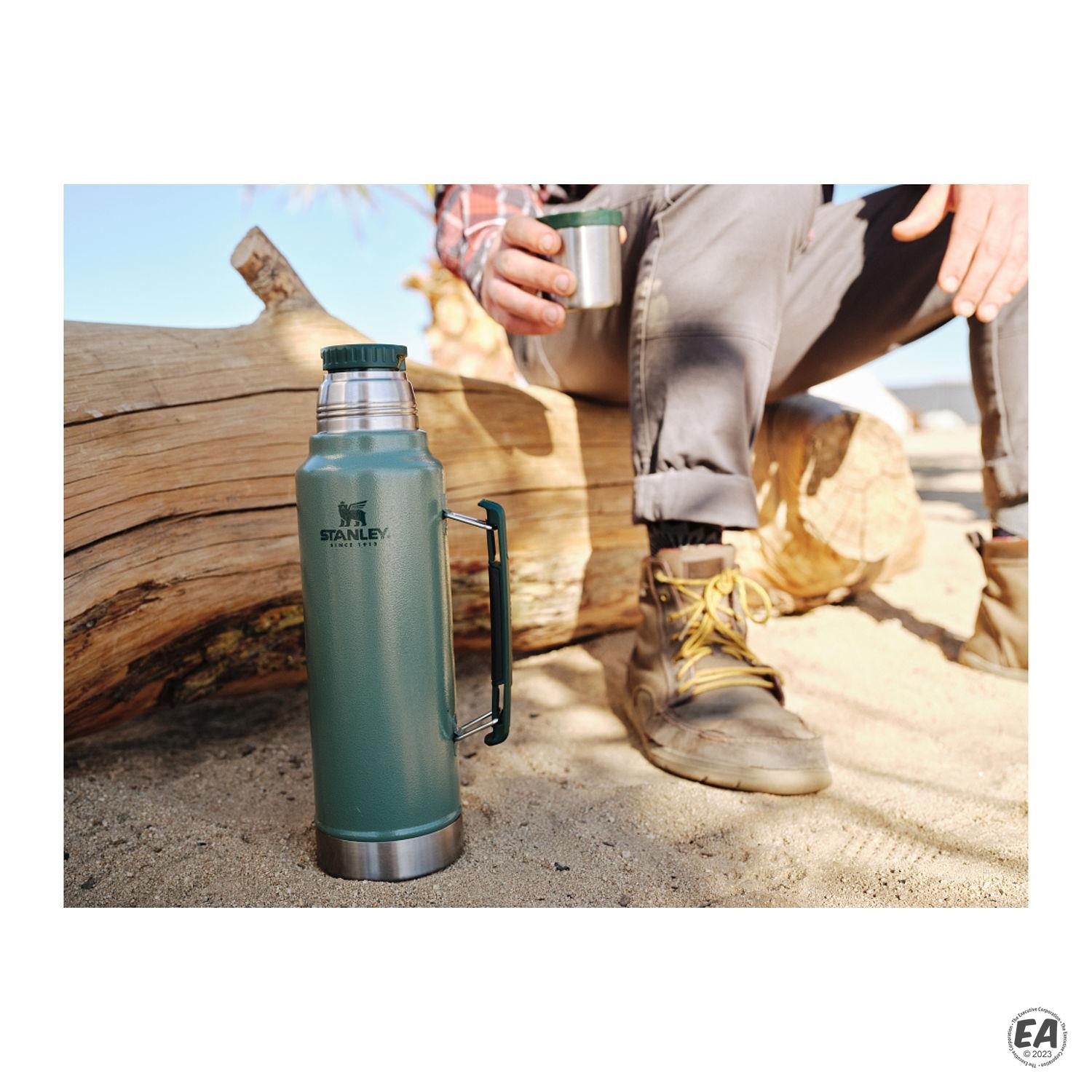
02 / BUILT AROUND REAL ROUTINES
Why their practical heritage still resonates.
Over the decades, Stanley became associated with workers and outdoor users. Union College’s account of the company’s origins describes a brand whose durable containers appealed to people spending their days on worksites and beyond the house. Their usefulness gave the products a context: they were equipment for a routine, not simply something to display. Explore the historical account ↗
That legacy gives today’s drinkware an interesting balance. The shape and finish may feel familiar, while a new capacity or lid format can fit a different part of the day. A classic-looking bottle and a handled tumbler can appeal to different recipients without losing the connection to Stanley’s longer story.
There are several useful ways to think about that design approach. Material matters because it affects the feel and function of the finished product. Insulation matters because people have a reason for carrying a hot or cold drink. Handles, openings, and lids matter because they are the parts a person interacts with every time they use it. Good product selection considers all of those details together.
Stanley describes durability and reuse as part of their design philosophy, and their sustainability information discusses replacement parts as one way to keep products in use. That is the brand’s stated approach; it should not be turned into a blanket environmental claim about every item or every customer’s behavior. Read Stanley’s published design approach ↗
For an EA project, practical questions make the story useful. Does the recipient want a mug with a handle? Is a compact capacity more appropriate than a large tumbler? Will a product spend most of its time at a desk or travel with its owner? Those answers are more helpful than selecting the largest size simply because it is familiar.
Care also belongs in the conversation. Follow the instructions for the exact Stanley product, and confirm any additional care guidance for the selected decoration. A finish that looks right at approval should also fit the way recipients will look after their gifts. Temperature-retention, lid, and care claims should always follow the item’s verified specifications.
The result can be a gift that has both recognition and purpose. The Stanley name supplies context, the format supplies function, and the decoration gives the project its connection to your organization. None of those elements needs to compete with the others.
Explore EA’s Stanley catalogA SMALLER FORMAT. A CLEAR IMPRESSION.
The familiar camp mug,
made personal.
The Stanley 12 oz Legendary Camp Mug, photographed in everyday outdoor use.
See this Camp Mug on EA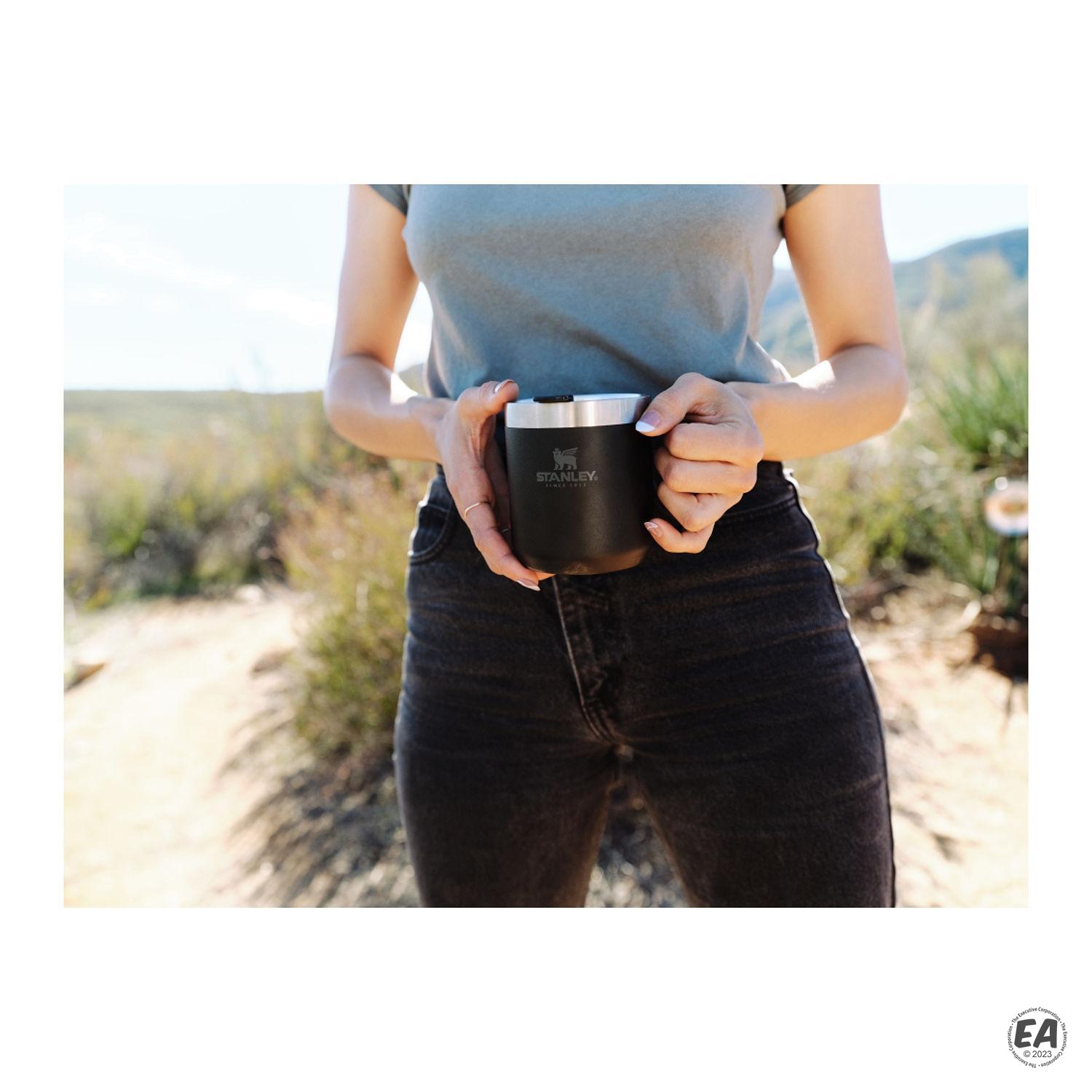
03 / FROM PRODUCT TO CULTURAL PHENOMENON
The Quencher changed the conversation.
Stanley introduced the Adventure Quencher in 2016. Its later popularity can make that launch sound like an instant success, but the story unfolded over several years. The tumbler gradually found an audience beyond the workers and outdoor users most closely associated with the brand’s earlier identity.
Around 2019, advocates including The Buy Guide helped show there was an enthusiastic audience for the Quencher. This was an important commercial and marketing turning point, rather than the date of the H2.0 redesign. Reporting describes how new attention, recommendations, and a broader view of the customer helped change the product’s trajectory. Read Retail Dive’s account ↗
The design milestone followed in 2022. Stanley announced the Quencher H2.0 FlowState on August 29, with availability beginning September 13. Their announcement described updates including a three-position lid and a revised comfort-grip handle. It also described a product that had already been gathering substantial social-media momentum. Read Stanley’s 2022 announcement ↗
The distinction matters: a 2016 introduction, a new audience emerging around 2019–2020, and a documented 2022 redesign are different chapters. Together, they explain how a practical tumbler became an object people recommended, carried visibly, and recognized in each other’s routines.
Social platforms made those routines easy to share. The handled shape, straw, size, and color choices gave the product recognizable details. Conversations about everyday hydration placed it in settings far removed from the image of an older outdoor flask. The brand’s heritage did not disappear; it became the backdrop to a new kind of familiarity.
For corporate gifting, that familiarity changes the starting point. A recipient may already understand what a Quencher is before seeing an organization’s logo on one. That recognition can make the gift feel relevant, while the quality of the product choice and decoration still determines whether the project feels considered.
For Custom Stanley projects, that renewed familiarity creates a useful bridge between a product people recognize and the organization giving it. A company logo can turn a familiar Quencher into an employee recognition gift, client thank-you, or part of a coordinated company program. The appeal comes from the combination: Stanley’s recognizable product design and an organization’s own identity, presented thoughtfully.
On the Quencher series, the promotional logo belongs on the reverse side of the Stanley mark. The decorated example below shows those separate views; it does not place a company logo over Stanley’s identity. EA can help review the eligible decoration method, artwork size, and placement for the selected item before an order is approved. Explore Custom Stanley planning here, or browse the Stanley products offered by Executive Advertising.
Popularity is not a promise that every capacity or style suits every person. It is a reason to offer a clear choice. A specific audience may prefer the 40 oz format; another may want something easier to carry or a different drinking style. EA’s role is to help connect that interest with the Stanley products actually available through its promotional catalog.
CUSTOM STANLEY. A PERSONAL CONNECTION.
A familiar Quencher.
Your logo on the reverse.
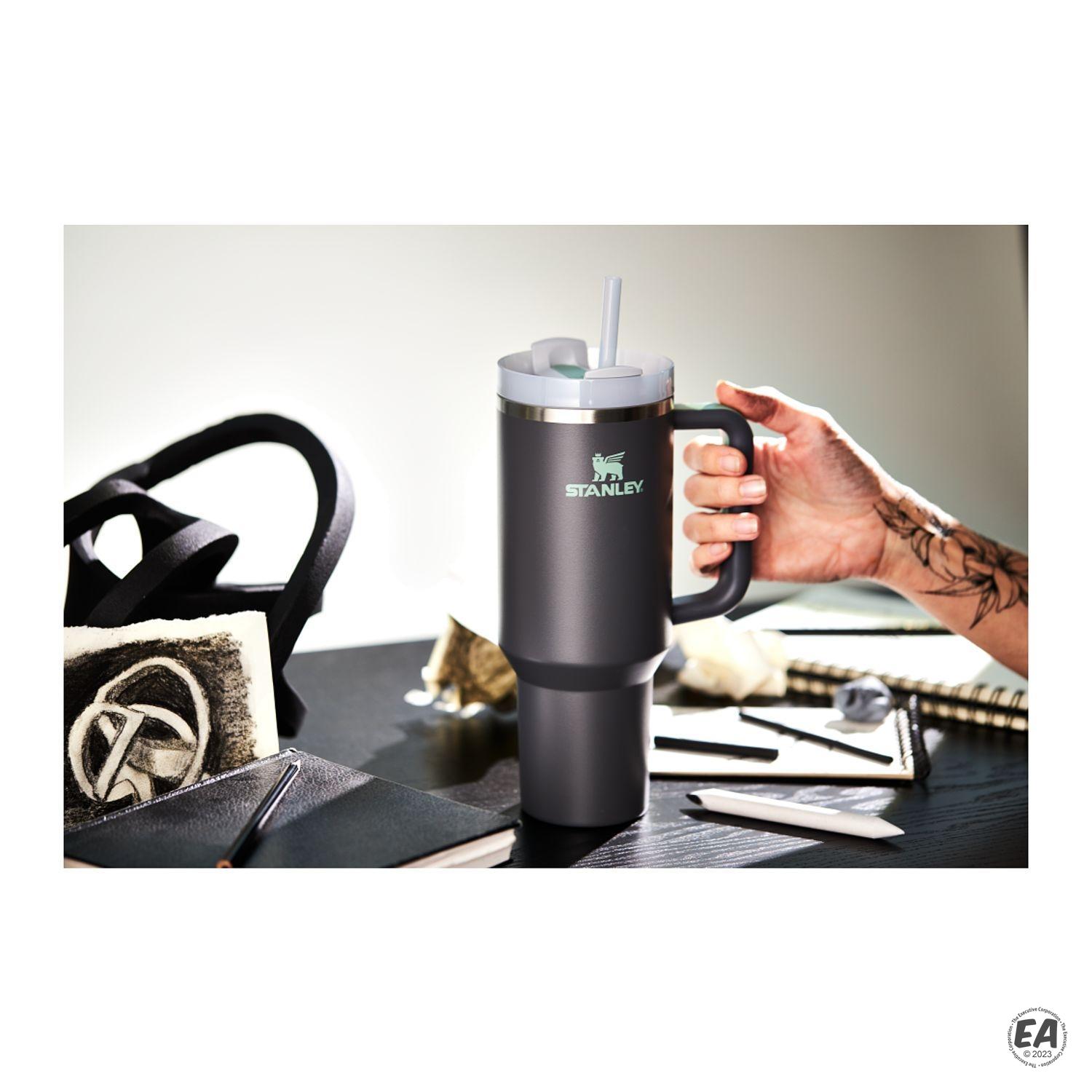
EA’s 40 oz Quencher H2.O FlowState Tumbler, shown with sample promotional decoration. Your logo goes on the reverse side of the Stanley mark, keeping the two identities distinct.
Explore this Custom Stanley Quencher on EA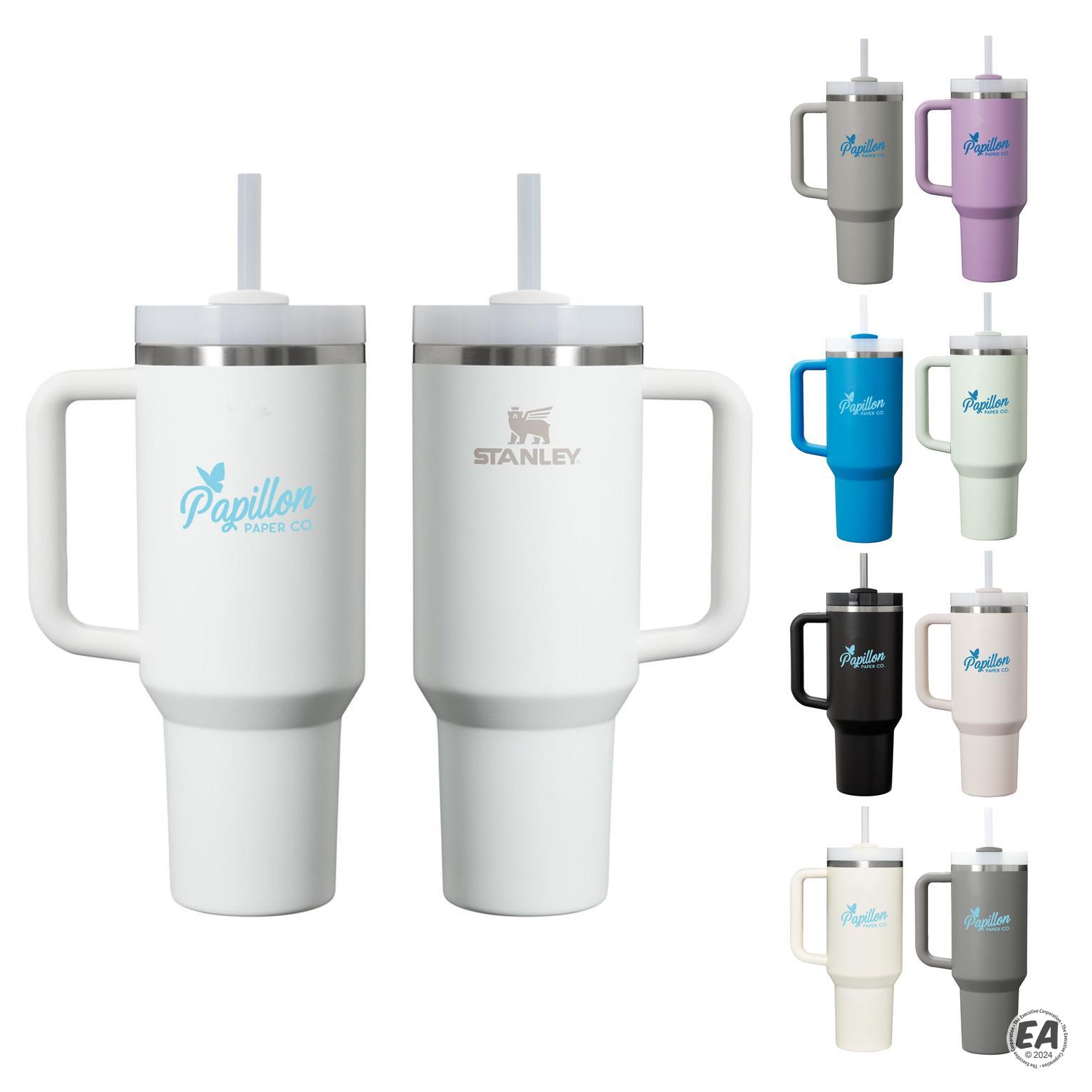
04 / BRINGING THE STORY HOME TO EA
When retail recognition meets promotional purpose.
As the Quencher’s profile grew, it became part of the promotional-products conversation. Executive Advertising’s December 2023 commentary described the demand reaching suppliers and distributors, alongside the practical challenges of finding products for customization. That article provides a contemporaneous EA perspective, rather than a claim that a current item is scarce or available today. Read EA’s 2023 perspective ↗
For an organization, a recognizable retail brand can change how a promotional gift is received. Instead of introducing an unfamiliar object, the project places a company identity on a product the recipient may already know. That creates an opportunity for thoughtful recognition: an employee milestone, a client thank-you, or a program that aims to be useful beyond the event itself.
Recognition alone does not finish the project. The commercial details still have to work. EA’s promotional assortment, eligible colors, decoration methods, order minimums, and production timing may differ from Stanley’s retail offering. Retail popularity should never be used as a shortcut for confirming those details.
A good starting brief includes the recipient group, intended use, quantity, delivery needs, and artwork. From there, the product and decoration can be considered together. The goal is a visible, well-proportioned logo on a format that makes sense for the person receiving it—not simply the largest possible imprint on the most talked-about tumbler.
That is where Executive Advertising fits into this story. Stanley creates the product brand and its heritage. EA helps organizations explore the promotional products it offers, review the appropriate decoration choices, and continue through the existing EA ordering process. The two roles stay distinct, even when the finished gift brings both strengths together.
This microsite is the discovery and education layer. You can read the history, review featured formats, and prepare your project here. When you choose a particular item, its direct EA product link takes you to the corresponding transactional page. For a wider view of the available assortment, use Executive Advertising’s Stanley catalog.
That approach keeps the experience straightforward: useful information first, a specific product decision next, and customization and purchasing on ExecutiveAdvertising.com. Your recipient gets a considered product; your team gets a clear path from inspiration to an approved order.
MORE THAN ONE WAY TO MAKE IT PERSONAL
Match the format
to their day.
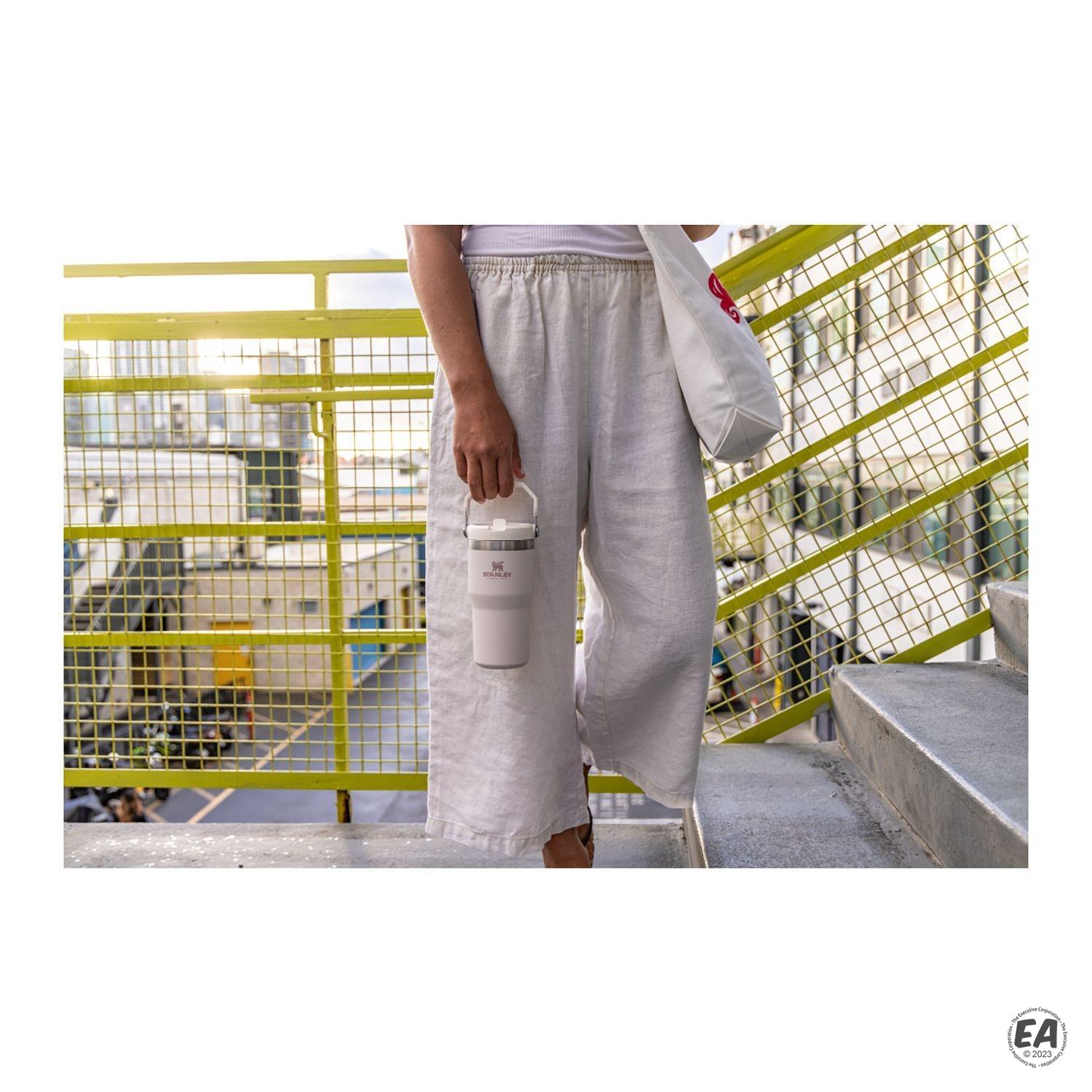
The Stanley 20 oz IceFlow Flip Straw Tumbler, out in the day with its owner.
See this IceFlow on EA